If you’ve ever found yourself stuck on the side of the road with a car problem, you know it can be a stressful experience. Whether it’s a flat tire, engine trouble, or a dead battery, knowing how to handle these situations can save you time and money. This guide offers essential tips for effective roadside car repair that every driver should keep in mind. From safety measures to communicating with assistance providers, we’ve got you covered.
Key Takeaways
- Always prioritize safety by pulling over to a secure location and using hazard lights.
- Know how to change a flat tire and check for engine issues before calling for help.
- Communicate clearly with roadside assistance about your location and the problem.
- Consider professional help to avoid making vehicle issues worse and save time.
- Keep essential documents and an emergency kit in your car for quick access during repairs.
Prioritizing Safety During Roadside Car Repair
Roadside car repairs can be risky, so safety is paramount. It’s easy to get tunnel vision when you’re focused on fixing the problem, but remember to stay aware of your surroundings. Here’s how to minimize danger during roadside fixes.
Finding a Safe Location
The first thing you should do is find a safe place to pull over. Don’t just stop on the side of the road if you can avoid it. Look for a wide shoulder, an exit ramp, or even a parking lot. The further away from traffic you are, the better. Think about it: changing a tire next to speeding cars is a recipe for disaster. If possible, try to get the vehicle completely off the road. This simple step dramatically reduces the risk of an accident. If you have to drive a short distance on a flat to reach a safer spot, do it slowly and carefully. Remember, your safety is more important than your tire.
Using Hazard Lights and Flares
Once you’re in a relatively safe spot, make sure you’re visible. Turn on your hazard lights immediately. These lights signal to other drivers that you’re experiencing trouble. If it’s dark or visibility is poor, consider using flares or reflective triangles. Place them a good distance behind your vehicle to give approaching drivers plenty of warning. Think of it as creating a safety zone around your car. The more visible you are, the less likely someone is to collide with you. Make sure you know how to properly set up reflective warning devices before you need them.
Staying Aware of Surroundings
Even with hazard lights and flares, you need to stay alert. Don’t get so engrossed in the repair that you forget about the traffic around you. Keep an eye on passing cars, and listen for any unusual sounds. If you feel unsafe at any point, stop what you’re doing and call for assistance. It’s better to wait for help than to risk getting injured. Also, be mindful of where you’re standing and moving. Avoid standing directly in the path of traffic, and be careful when walking around your vehicle.
Roadside repairs can be stressful, but staying calm and focused is key. Remember, your safety is the top priority. If you’re not comfortable performing the repair yourself, don’t hesitate to call for professional help. It’s always better to be safe than sorry.
Common Roadside Car Repair Issues
Roadside car troubles always seem to happen at the worst possible time, right? It’s like your car knows you’re already running late or have a super important meeting. But knowing what to expect can make these situations a little less stressful. Let’s look at some of the most common problems that might leave you stranded.
Dealing with Flat Tires
Flat tires are probably the most frequent roadside headache. It’s super important to pull over safely if you notice a flat. Trying to drive on it can damage your wheel and make things way worse. Make sure you know how to change a tire, or have a reliable roadside assistance service on speed dial. I always check my spare tire’s pressure every few months, just to be sure it’s ready to go if I need it.
Addressing Engine Troubles
Engine problems can be a bit more intimidating than a flat. If your engine starts making weird noises, overheating, or just plain refusing to start, it’s time to investigate. Don’t keep driving if something feels off. Pull over, turn off the engine, and let it cool down before checking anything. Here are a few things to consider:
- Check your fluid levels (oil, coolant). Low fluids can cause serious engine damage.
- Look for any obvious leaks. A puddle under your car is never a good sign.
- Listen for unusual sounds. Knocking, hissing, or grinding noises can indicate different problems.
If you’re not comfortable poking around under the hood, it’s always best to call for help. Engine repairs can be complex, and you don’t want to accidentally make things worse.
Handling Battery Failures
A dead battery is another common culprit for roadside breakdowns. It often happens when you least expect it, like after leaving your lights on or not driving your car for a while. Here’s how to handle it:
- Try jump-starting the car. Make sure you have jumper cables and know how to use them correctly.
- Check the battery terminals for corrosion. Clean them off with a wire brush if needed.
- Consider carrying a portable jump starter. These little devices can be a lifesaver when you’re stranded.
| Issue | Possible Cause | Solution |
|---|---|---|
| Flat Tire | Puncture, worn tire | Change tire, call for assistance |
| Engine Trouble | Overheating, low fluids, bad sensor | Check fluids, call for assistance |
| Dead Battery | Lights left on, old battery | Jump start, replace battery |
Effective Communication with Assistance Providers
When you’re stuck on the side of the road, getting help quickly and efficiently is key. That’s why clear communication with roadside assistance providers is so important. It can make the difference between a quick fix and a long, frustrating wait.
Providing Clear Location Details
Giving the assistance provider your exact location is the first and most important step. Don’t just say "near the highway." Use your GPS to provide the street address, mile marker, or nearby landmarks. The more specific you are, the faster they can find you. I remember one time I just said "near exit 20" and the call answering service had a hard time finding me. It’s also a good idea to describe your surroundings – are you near a gas station, a bridge, or a particular business? This helps the driver confirm they’re in the right spot, especially in rural areas where addresses can be confusing.
Describing the Issue Accurately
Be as detailed as possible when describing the problem with your vehicle. Instead of saying "my car won’t start," try to explain what happens when you turn the key. Does it make a clicking sound? Does the engine turn over but not catch? The more information you provide, the better the assistance provider can diagnose the issue and bring the right tools or equipment. If you know the make, model, and year of your car, have that information ready too. This helps them understand potential issues specific to your vehicle. Also, don’t be afraid to mention any recent repairs or maintenance you’ve had done – it might be relevant to the current problem.
Understanding Service Options
Before agreeing to any service, make sure you understand all your options and the associated costs. Ask the assistance provider what services they offer, what each service includes, and how much it will cost. Don’t be afraid to ask questions and clarify anything you don’t understand. For example, is a tow included, or is that an extra charge? What are the payment methods? Are there any additional fees for after-hours service or long-distance tows? Knowing your options empowers you to make informed decisions and avoid any surprises later on. It’s also a good idea to check if your insurance or auto club membership covers any of the services.
It’s always a good idea to confirm the estimated time of arrival (ETA) and get a contact number for the driver. This allows you to stay informed and follow up if needed. Also, be sure to ask about their safety protocols and identification procedures to ensure you’re dealing with a legitimate service provider.
Benefits of Professional Roadside Car Repair
Expertise in Diagnosing Problems
When your car breaks down, it can be tough to figure out what’s wrong, especially if you’re not a mechanic. That’s where professional roadside assistance comes in handy. They have the training and experience to quickly diagnose the issue, saving you time and stress. They use specialized tools and knowledge to pinpoint the problem, whether it’s a simple fix or something more complex. This accurate diagnosis is the first step to getting you back on the road.
Avoiding Further Vehicle Damage
Tinkering with your car when you’re not sure what you’re doing can sometimes make things worse. I remember trying to fix a loose wire once and ended up short-circuiting the whole system! Professional technicians know how to handle car repairs without causing additional damage. They’re trained to identify potential risks and take precautions to protect your vehicle. By trusting them, you’re avoiding costly mistakes and ensuring that the repair is done right the first time. Plus, they can spot other potential issues before they become major problems. For example, mobile mechanics can prevent further damage.
Time Efficiency in Repairs
Let’s face it, car repairs can take a lot of time, especially if you’re trying to do it yourself. I once spent an entire weekend trying to change a flat tire, only to realize I didn’t have the right tools. Professional roadside assistance services are usually much faster. They have the right tools, the knowledge, and the experience to get the job done quickly and efficiently. This means less time stranded on the side of the road and more time getting to where you need to be.
Waiting for roadside assistance can be frustrating, but it’s often the best option. Professionals can handle the repair safely and efficiently, saving you time and potential headaches. They also have access to resources and equipment that you might not have, ensuring a quicker resolution to your car trouble.
Preparing for Roadside Car Repair
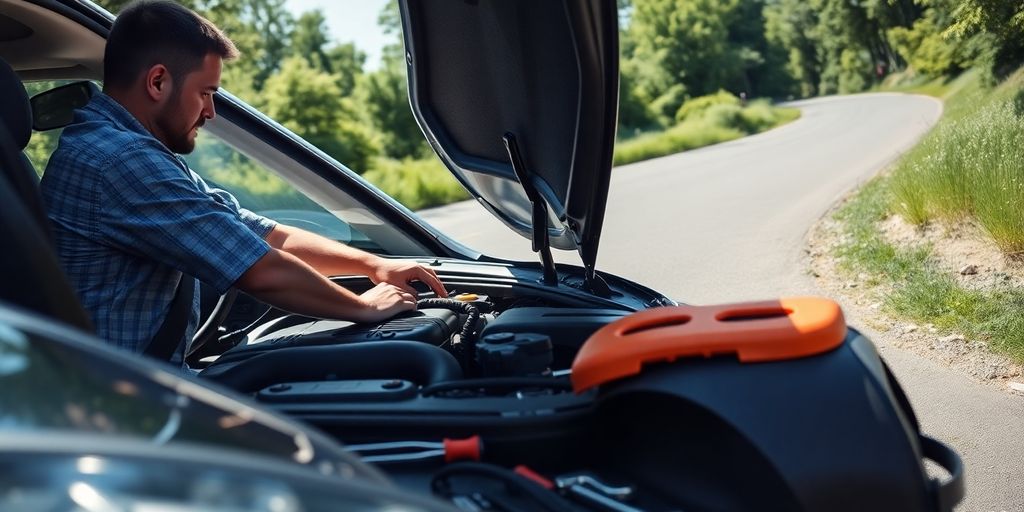
Roadside car trouble? Nobody wants it, but being ready can make a huge difference. It’s not just about having the right tools; it’s about having the right information and mindset. Let’s get into how you can prep for those unexpected moments.
Keeping Essential Documents Handy
Always keep your car’s important papers where you can grab them easily. Think of it like this: when something goes wrong, the last thing you want to do is dig through a messy glove compartment. I’m talking about your registration, insurance card, and the car’s manual. The manual can be a lifesaver for quick troubleshooting. Also, if you have any warranty info or service records, toss those in too. It’s also a good idea to have your roadside assistance info handy, like your AAA card. Consider making digital copies on your phone as a backup – you never know when that might come in handy.
Maintaining a Well-Stocked Emergency Kit
Think of your emergency kit as your roadside survival pack. Here’s what I recommend:
- Jumper cables: A must-have for dead batteries.
- A basic toolkit: Pliers, screwdrivers, adjustable wrench – the basics for simple fixes.
- A flashlight with extra batteries: For nighttime repairs.
- First-aid kit: Bandages, antiseptic wipes, pain relievers – cover the basics.
- Warning devices: Flares or reflective triangles to alert other drivers.
- A tire pressure gauge: To check your tires after a fill or repair.
- Duct tape: Because duct tape fixes everything (almost).
- Gloves: To keep your hands clean.
- A blanket: In case you’re stuck waiting in cold weather.
I always keep a few bottles of water and some non-perishable snacks in my kit too. You never know how long you might be waiting for help, and it’s better to be prepared.
Understanding Your Vehicle’s Maintenance History
Knowing your car’s maintenance history can be super helpful. Keep a record of all the work you’ve had done – oil changes, tire rotations, brake jobs, etc. This can help you (and a mechanic) diagnose problems faster. If you notice any weird noises, smells, or changes in performance, write them down. The more info you have, the easier it will be to explain the issue to a mechanic. Plus, knowing when you last had certain services done can prevent you from getting scammed into unnecessary repairs. It’s all about being an informed car owner.
Managing Time Around Roadside Car Repairs

Roadside car repairs can throw a wrench into your day, but with some planning, you can minimize the disruption. It’s all about being proactive and understanding that things might take longer than expected. Let’s look at how to handle the time aspect of roadside repairs.
Scheduling Appointments Wisely
If you know you need a repair, don’t wait until the last minute. Try to schedule your appointment during off-peak hours or days. This can reduce wait times and potentially get your car back on the road faster. Consider scheduling in the early morning or mid-week to avoid the weekend rush. Also, when booking, ask about the shop’s current workload and estimated turnaround time for similar repairs. This gives you a realistic expectation and helps you plan your day better. Remember, a little planning can save you a lot of time and stress.
Allowing Extra Time for Repairs
Always pad the estimated repair time. Unexpected issues can arise, and it’s better to be pleasantly surprised than caught off guard. If the mechanic says it will take two hours, plan for three or four. This buffer allows for unforeseen complications, parts delays, or simply a more thorough job. It also reduces your stress levels, knowing you’re not constantly rushing. Use the extra time to catch up on work, read a book, or simply relax. Rushing the repair can lead to mistakes and potentially more problems down the road. Consider alternative transportation options like rideshare services to keep your day moving.
Staying Informed During the Process
Communication is key. Ask the mechanic for regular updates on the progress of the repair. A good shop will keep you informed about any delays or unexpected issues. Don’t be afraid to ask questions about the repair process and estimated completion time. This not only keeps you in the loop but also helps you understand the work being done on your vehicle. If there are significant delays, discuss alternative solutions, such as a loaner car or a revised completion schedule. Staying informed empowers you to make informed decisions and manage your time effectively. Remember to keep your car maintenance checks up to date to avoid unexpected repairs.
Future Trends in Roadside Car Repair Services
Technological Advancements in Assistance
Roadside assistance is getting smarter, faster, and more connected. Expect to see even more reliance on technology to streamline the entire process. For example, GPS tracking is already common, but soon, augmented reality might help technicians diagnose issues remotely. Mobile apps will continue to evolve, offering features like real-time video diagnostics and automated dispatch based on the severity of the problem. These advancements aim to reduce wait times and improve the accuracy of initial assessments. It’s all about getting you back on the road with minimal delay. Consider the impact of quicker responses on customer satisfaction.
Integration of AI for Predictive Maintenance
Imagine your car telling you it needs a repair before it breaks down on the side of the road. That’s the promise of AI in predictive maintenance. AI algorithms can analyze data from your car’s sensors to identify potential problems early on. This could include things like battery health, tire pressure, and engine performance. By catching these issues early, you can schedule maintenance proactively, avoiding unexpected breakdowns. It’s like having a virtual mechanic constantly monitoring your car’s health. This proactive approach not only saves you from roadside headaches but can also extend the life of your vehicle.
The integration of AI is not just about predicting failures; it’s about optimizing vehicle performance and reducing overall maintenance costs. By understanding the patterns and trends in vehicle data, AI can recommend the most efficient maintenance schedules and identify potential fuel efficiency improvements.
Mobile Apps for Quick Access
Mobile apps are becoming the go-to tool for roadside assistance. They offer a convenient way to request help, track the arrival of a technician, and communicate with service providers. But the future of these apps goes beyond basic functionality. Expect to see features like integrated payment options, digital insurance cards, and even the ability to submit photos and videos of the problem to help technicians prepare for the repair. Some apps may even offer gamified maintenance reminders and rewards for keeping your car in good shape. It’s all about making roadside assistance more accessible, user-friendly, and integrated into your daily driving experience.
As we look ahead, roadside car repair services are set to change in exciting ways. With more people relying on their cars, the need for quick and easy repairs will grow. Mobile mechanics will become even more popular, bringing their services right to you, whether you’re at home or stuck on the road. This means less waiting and more convenience for drivers. If you want to stay updated on these trends and learn how we can help you with your car, visit our website today!
Wrapping It Up: Be Prepared for the Unexpected
In the end, being ready for car troubles on the road can save you a lot of headaches. Knowing some basic repair tips, keeping your car in good shape, and having the right tools can make a big difference. Don’t forget to have a plan for when things go wrong, like knowing who to call for help. Whether it’s a flat tire or a dead battery, being prepared means you can handle it without too much stress. So, take these tips to heart, and you’ll be better equipped to tackle any roadside issue that comes your way.
Frequently Asked Questions
What should I do if my car breaks down on the road?
First, find a safe spot to pull over. Turn on your hazard lights and set up flares or warning triangles to alert other drivers.
How can I change a flat tire?
To change a flat tire, find your spare tire and jack. Safely lift the car, remove the flat tire, and put on the spare. If you’re unsure, it’s best to call for help.
What are common signs of engine trouble?
Common signs of engine trouble include strange noises, smoke, or warning lights on the dashboard. If you notice any of these, pull over and turn off the engine.
How can I communicate effectively with roadside assistance?
When calling for help, be clear about your location and explain the problem you’re having with your car. This helps them respond quickly.
Why should I use professional roadside assistance?
Using professional help ensures that experienced technicians handle your vehicle, reducing the risk of further damage and saving you time.
What should I keep in my emergency kit for roadside repairs?
Your emergency kit should include items like a spare tire, jack, jumper cables, basic tools, first aid supplies, and water.